Rice is one of the world’s most widely eaten staple foods, fueling billions of people every day.
Despite its simplicity, rice often sparks debate when it comes to health.
The most common comparison is white rice vs brown rice.
They come from the same grain, yet their nutritional profiles and health impacts differ due to processing.
This article breaks down those differences, explores how each affects health and performance, and helps you choose the best option for your fitness goals.
What’s the Difference Between White and Brown Rice?
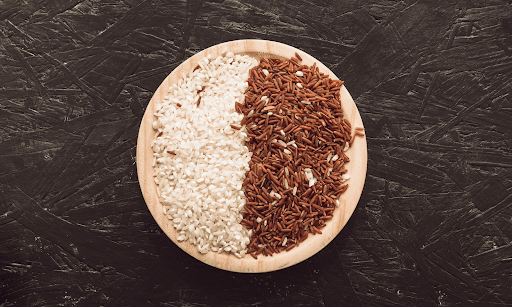
Brown rice is a whole grain, meaning it retains its bran and germ layers.
These outer layers contain fiber, vitamins, minerals, and plant compounds that contribute to its nutritional value and slightly chewy texture.
White rice, on the other hand, is milled and polished to remove the bran and germ.
This process improves shelf life and creates a softer texture, but it also removes much of the natural fiber and micronutrients.
While both start as the same grain, their processing leads to meaningful differences in nutrition and digestion.
Nutrition Comparison (Side-by-Side)
When looking at white rice vs brown rice nutrition, the biggest differences come down to fiber, micronutrients, and how the body processes them.
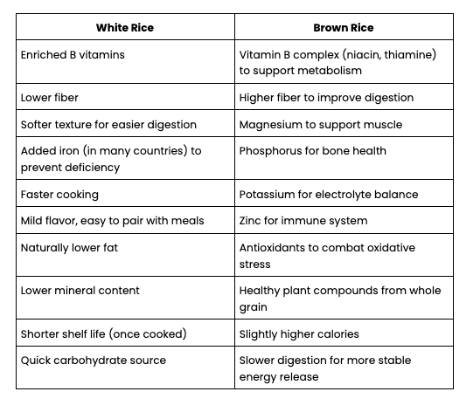
Comparison takeaway: Brown rice retains more of its natural nutrients, while white rice is gentler on digestion and provides quicker energy.
Key Health Benefits of Brown Rice
Some key benefits of brown rice are:
- Higher fiber aids digestion: Brown rice promotes regular bowel movements and helps you feel full longer, which can support appetite control.
- Better blood sugar control: Slower digestion leads to a lower glycemic response, which may help reduce blood sugar spikes.
- Heart health support: Fiber and minerals like magnesium are associated with improved cholesterol balance.
- Whole-grain benefits: Large population studies link whole-grain intake to a lower risk of metabolic and cardiovascular diseases.
Research suggests that brown rice may be more protective against metabolic disorders when consumed regularly as part of a balanced diet.
Health Benefits of White Rice
Then what about white rice? Here's the explanation:
- Gentle on digestion: White rice is easier to digest, making it suitable for sensitive stomachs or recovery diets.
- Good energy source: Its fast-digesting carbohydrates are useful before or after intense workouts.
- Low fiber advantage in specific cases: During Irritable Bowel Syndrome (IBS) flare-ups, illness, or post-surgery recovery, low-fiber foods like white rice are often recommended.
- Fortified nutrition: In many countries, white rice is enriched with B vitamins and iron, helping prevent deficiencies.
Downsides & Considerations
Brown Rice Concerns
- Contains more phytic acid, which can reduce mineral absorption in some individuals
- Takes longer to cook and may be harder to digest for some people
White Rice Concerns
- Higher glycemic impact, especially in large portions
- Lower fiber and natural micronutrient content
- Heavy reliance on white rice may crowd out more nutrient-dense foods
The study also showed that the processing method affects how contaminants are distributed in rice.
This highlights the importance of selecting sources and varieties rather than relying on one type exclusively.
Glycemic Index & Blood Sugar Impact
Brown rice generally has a lower glycemic index (GI) than white rice, meaning it’s digested more slowly and helps stabilize blood sugar levels.
This can be beneficial for metabolic health and long-term energy control.
However, GI can vary depending on rice variety, cooking method, and portion size.
White rice can still fit into a healthy diet when paired with protein, fiber, and fats to slow glucose absorption.
How to Choose Based on Your Goals
These are things you need to consider before adding them to your diet:
- Weight management: Brown rice may help with fullness due to higher fiber.
- Athletic performance: White rice provides quick energy for training and recovery.
- Digestive sensitivity: White rice is often easier on the gut during flare-ups.
- Heart health & long-term wellness: Brown rice offers more whole-grain nutrients linked to reduced chronic disease risk.
The best choice depends on how your body responds and what your current goals are.
Conclusion
Both brown and white rice have a place in a healthy, active lifestyle.
Brown rice provides more fiber, antioxidants, and whole-grain benefits, while white rice is easier to digest and delivers fast, reliable energy.
Rather than labeling one as “good” or “bad,” the smarter approach is choosing based on your needs, tolerance, and activity level.
Include rice mindfully, balance it with protein and vegetables, and rotate varieties to get the benefits of both.
Try to use brown rice for everyday meals and white rice around workouts—and notice how your body responds.
Don't forget to visit LUM and the LUM’s blog to get lots of tips for a greener lifestyle.