Honey and maple syrup are two of the most popular natural sweeteners, often chosen as alternatives to refined sugar.
Both come from nature, both add sweetness and flavor—and both raise the same big question: which one is actually healthier?
In this guide, we will compare honey vs maple syrup by looking at how they are made, their nutritional comparisons, and their health benefits.
Let's find out together when each one makes the most sense in a balanced, active lifestyle.
What Are They? Simple Definitions
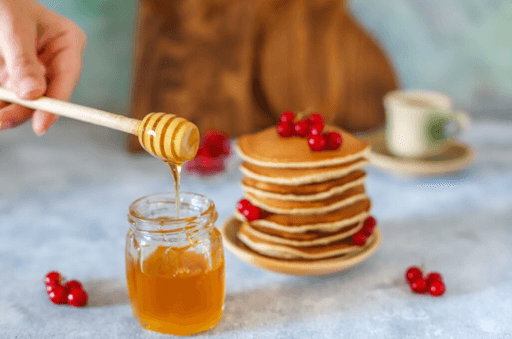
Honey is a natural sweetener produced by bees from flower nectar.
The nectar is enzymatically converted and stored in the honeycomb.
They produce a thick, amber-colored liquid with a floral aroma that varies depending on the type of flower used.
Beyond sweetness, honey contains small amounts of bioactive compounds, including antioxidants and organic acids.
Maple syrup is made by collecting sap from maple trees, most commonly sugar maple trees, and boiling it down to concentrate the sugars.
The result is a smooth syrup with a lighter sweetness and characteristic caramel-like flavor.
Unlike honey, maple syrup’s composition reflects its plant-based origin, providing trace minerals and phenolic compounds.
They come from very different biological sources, their profile isn’t just about sweetness, but about origin, sugar type, and micronutrient profile.
Nutrition Snapshot—How Do They Compare?
Honey
- Slightly higher calories per teaspoon
- Contains small amounts of vitamins, minerals, and antioxidants
- Rich in glucose and fructose
- Often has a slightly higher glycemic effect, depending on variety
Maple Syrup
- Slightly lower calories per equivalent serving
- Provides trace minerals, especially manganese and zinc
- Composed mainly of sucrose
- Generally has a lower glycemic index than refined sugar, though comparisons with honey vary
Both honey and maple syrup are quick energy sources.
The main differences lie in micronutrients and sugar composition, not calorie content.
Key Health Benefits (Honey & Maple Syrup)
While neither sweetener is a miracle food, both offer modest health-related compounds when used in moderation.
Honey Benefits
- Antioxidants: Certain varieties contain polyphenols linked to cellular protection
- Soothing properties: Traditionally used for sore throats and cough relief
- Natural antimicrobial activity: Used historically in wound care and folk remedies
Maple Syrup Benefits
- Minerals: Provides manganese and zinc, supporting enzyme and immune function
- Antioxidants: Contains phenolic compounds with antioxidant potential
- Glycemic response: Sucrose-based profile may be favorable for some people, depending on portion size
Important note: Benefits are context-dependent—portion size, total diet quality, and activity level matter far more than the sweetener alone.
Potential Downsides & Considerations
Even natural sweeteners still count as sugar. Keep these things in mind as consideration:
Honey Concerns
- High sugar content adds calories quickly
- Not safe for infants under 1 year due to botulism risk
- Can raise blood glucose similar to other sweeteners
Maple Syrup Concerns
- Still calorie- and sugar-dense
- “Natural” does not mean low-calorie
- Many commercial syrups are not pure maple syrup and contain added sugars or corn syrup
Glycemic Index & Blood Sugar Impact
The glycemic index (GI) measures how quickly a food raises blood sugar.
Both honey and maple syrup have variable GI values, depending on processing, botanical source, and purity.
In general, both can raise blood glucose, but the impact can be reduced by:
- Using smaller portions
- Pairing with protein, fiber, or healthy fats
- Consuming them around physical activity
When to Choose Honey vs Maple Syrup
Both sweeteners can fit into a healthy lifestyle—context matters more than strict rules.
Choose Honey When:
- You want a thick, floral sweetness (tea, yogurt, toast)
- You’re looking for traditional soothing properties
- Pairing with spicy or herbal flavors
Choose Maple Syrup When:
- You prefer a lighter, caramel-like flavor (oatmeal, pancakes)
- You want trace minerals like manganese
- Baking where maple flavor enhances the recipe
Personal taste, recipe needs, and digestion matter more than choosing a “winner.”
Conclusion
Both honey and maple syrup are natural sweeteners with small nutritional advantages, but they are still high in sugar.
Neither should be considered a healthy food when consumed in large amounts.
The healthier choice depends on taste preference, culinary use, and personal dietary goals—not on eliminating one entirely.
For active individuals, mindful portions can absolutely fit into a balanced diet.
Explore more evidence-based nutrition insights by visiting LUM and LUM’s blog—your guide to a healthier, more informed lifestyle!