Granola has become a go-to breakfast and snack option for people trying to eat healthier.
You’ll find it sprinkled on yogurt bowls, blended into smoothie toppings, or eaten straight from the bag. It’s often marketed as a “clean” or “wholesome” food—but that doesn’t always tell the full story.
Many people ask the same question: is granola healthy or unhealthy? The answer isn’t black and white.
Granola can be nutrient-rich and satisfying, but it can also be surprisingly high in sugar and calories depending on the ingredients and portion size.
In this article, we’ll break down what granola is made of, its nutrition profile, potential benefits, downsides to watch for, and smart ways to enjoy it as part of a balanced lifestyle.
What Is Granola?
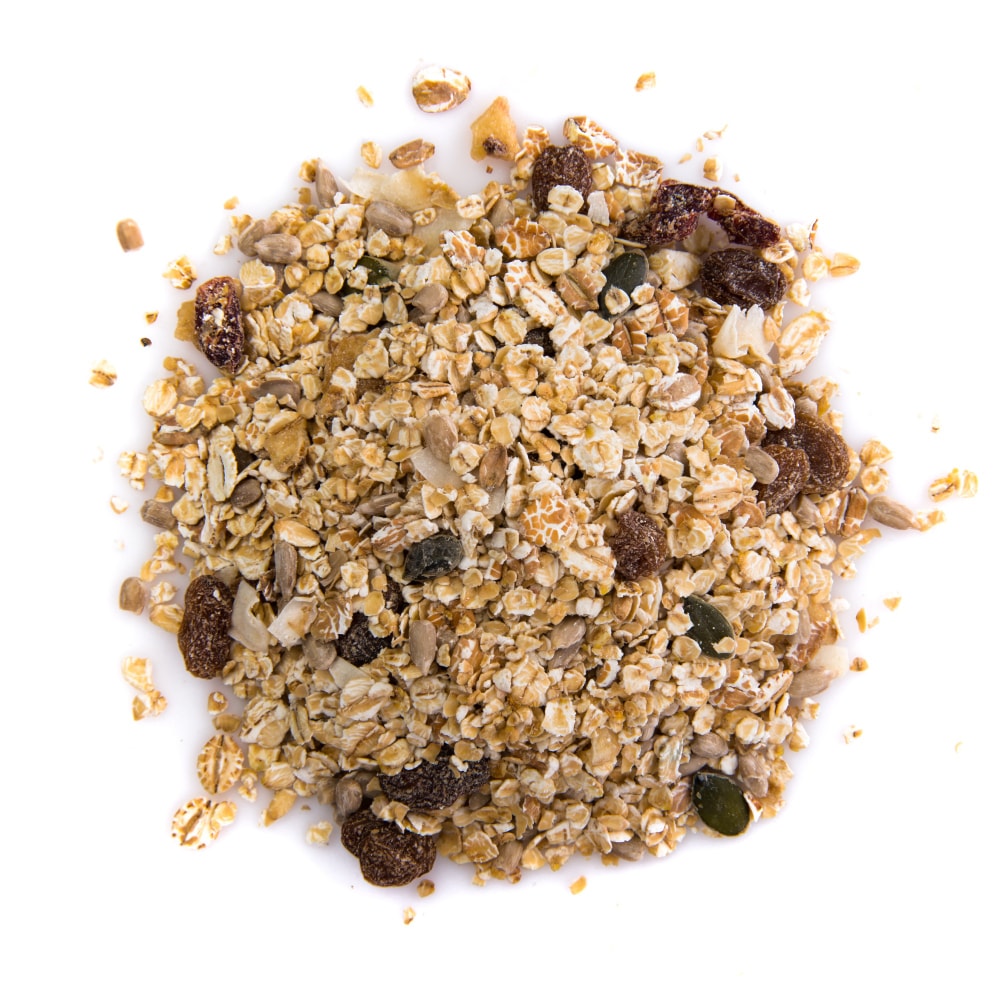
Granola is typically a baked or toasted mixture of rolled oats, nuts, seeds, dried fruit, sweeteners, and oil that are baked to create a crunchy texture.
While the base ingredients sound nutritious, the final product can vary dramatically from one brand—or homemade recipe—to another.
Based on its healthy ingredients, is granola really good for weight loss?
The answer is yes or no, depending on whether the granola has added sugar or saturated fat, whether it’s combined with other healthy foods or not, and so on.
Some granolas are fiber-rich and lightly sweetened, while others contain significant amounts of added sugar, syrups, and oils that quickly drive up calories.
Common sweeteners include honey, maple syrup, brown sugar, or glucose syrup, and oils are often added to help with crunch and flavor.
Understanding these differences is key to choosing a granola that aligns with your health goals, such as weight loss or a calorie-deficit diet.
Nutrition Snapshot—What’s in Granola?
Granola packs a lot into a small serving. Here’s a quick breakdown of what you’ll typically find:
Typical Components
- Oats: A good source of fiber and slow-release carbohydrates
- Nuts & seeds: Provide healthy fats, some protein, and minerals
- Dried fruit: Adds vitamins and antioxidants, but also natural sugars
- Sweeteners: Honey, syrup, or sugar increase total sugar and calories
- Oil: Adds fat and crunch, but boosts calorie density
Nutritional Range
- Calories: Often 150–300+ kcal per serving (and servings are small)
- Protein: Moderate, around 4–8g depending on ingredients
- Fat: Varies widely (from healthy unsaturated fats to added oils)
- Sugar: Can be high due to sweeteners and dried fruit
Potential Benefits of Granola
When chosen wisely and eaten mindfully, granola can offer several benefits:
- Source of fiber: Oatmeal, nuts (almonds, cashews), and seeds (chia seeds, flax seeds) support digestion and gut health, helping to control weight.
- Healthy fats: Nuts and seeds provide unsaturated fats that help with satiety
- Micronutrients: Ingredients can supply B and K vitamins, magnesium, iron, folate, zinc, and antioxidants—support energy metabolism, bone health, and immune function
- Versatile & convenient: Easy to add to yogurt, smoothie bowls, snacks, or even be eaten on its own
- Sustained energy: A mix of slow carbs and fats can help keep you full longer
Some studies also suggest that granola-based breakfasts may support better overall dietary balance and digestive regularity when included as part of a structured meal pattern.
Downsides & Things to Watch
Granola’s “health halo” can be misleading. Here are a few common pitfalls:
- High sugar content: Added sweeteners plus dried fruit can spike sugar intake
- Calorie density: Small portions contain a lot of energy, making overeating easy
- Added oils: Increase calories without always adding much nutritional value
- Store-bought variability: Some options are closer to dessert than health food
- Portion confusion: A labeled “serving” is often much smaller than people expect
These factors don’t mean granola is bad—but they do mean it requires awareness.
How to Choose or Make a Healthier Granola
If you enjoy granola and want to keep it in your routine, here’s how to do it smarter:
- Check sugar content: Aim for under 6–8g of added sugar per serving, the consumption should be only 20-30g if the granola contains high levels of sugar
- Scan the ingredient list: Look for oats, nuts, and seeds first; minimal sweeteners and low saturated fat
- Make your own: Homemade granola lets you control oil, sugar, and salt
- Pair with protein: Combine with Greek yogurt, cottage cheese, or protein-rich milk
- Watch portions: Use about a half cup as a topping, not the whole bowl
These tips are especially useful if you’re learning how to eat granola for weight loss without feeling deprived.
Healthy Serving Ideas
Its crunchy and crispy texture is best suited as a supporting player, not the main event. Try these balanced ideas:
- Yogurt bowl: Greek yogurt, fresh fruit, and a small granola sprinkle
- Smoothie topper: Granola adds crunchy textures to your protein smoothie or fruit smoothie bowl, such as berries, bananas, or apples
- Pair with milk: Use low-fat milk, almond milk, or soy milk
- Trail-mix style: Mix nuts and seeds with a small amount of granola
- Oatmeal boost: Stir into cooked oats for texture and flavor contrast
Don't forget to pay attention when you eat it! Granola is excellent as a filling breakfast or high-energy snack.
Conclusion
So, is granola healthy or unhealthy? The answer depends on ingredients, portion size, and how you use it.
Granola can absolutely be part of a healthy diet, but many store-bought versions are higher in sugar and calories than expected. Homemade or carefully chosen options usually offer better control and nutrition.
The key is mindful eating: pair granola with protein, keep portions realistic, and don’t rely on marketing claims alone.
When used intentionally, granola can fit beautifully into a balanced, enjoyable lifestyle.
If you’re interested in more practical nutrition insights and mindful eating tips, explore LUM and check out LUM’s blog for more evidence-informed, everyday wellness content.