When it comes to everyday spreads, butter vs margarine is one of the most common nutrition debates.
Both are staples in cooking, baking, and breakfast tables around the world.
However, they’re made very differently and affect your health in distinct ways.
This article breaks down where butter and margarine come from, their fat composition, and what that means for everyday use.
The goal isn’t to label as “good” or as “bad,” but to help you choose the right option based on your health goals.
What Are Butter & Margarine?
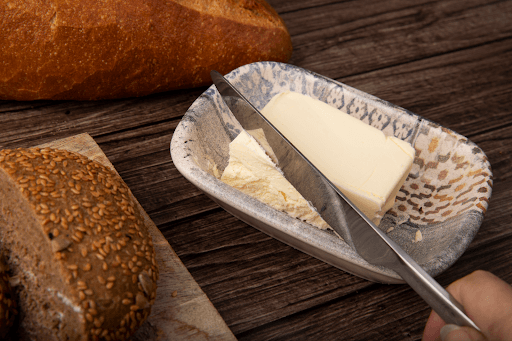
Butter is a natural dairy product made by churning cream from cow’s milk until the fat separates from the liquid.
By definition, it contains about 80% butterfat, along with water and small amounts of milk proteins.
Its rich flavor and creamy texture come from its high saturated fat content and naturally occurring fat-soluble vitamins like A, D, and K—especially in grass-fed varieties.
The rich flavor and soft texture come from the high saturated fat content.
Naturally occurring fat-soluble vitamins such as A, D, and K also play a role—especially in grass-fed varieties.
Modern margarines often contain emulsifiers, colorants, and added vitamins (such as A and D).
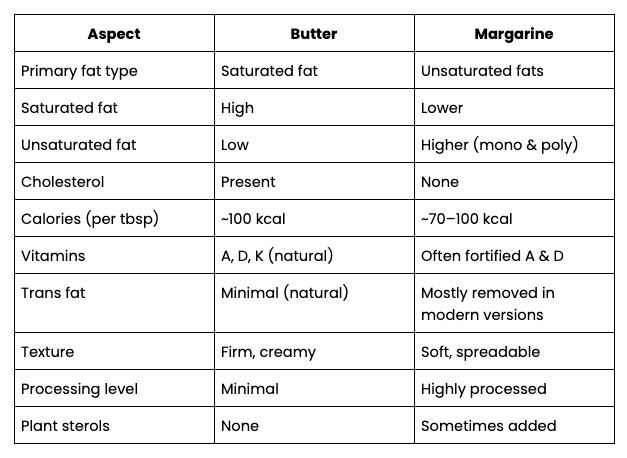
The way margarine is processed directly affects its fat quality, especially the balance between saturated, unsaturated, and trans fats.
Nutrition & Fat Composition (Side-by-Side)
Health Benefits & Risks
Margarine vs butter which is healthier?
Both spreads have advantages and trade-offs depending on portion size, frequency, and formulation.
Butter
Pros
- Natural source of fat-soluble vitamins
- Contains dairy-derived fatty acids that may offer limited metabolic benefits
Cons
- High saturated fat intake can raise LDL (“bad”) cholesterol
- Excess consumption is associated with increased cardiovascular risk
Margarine
Pros
- Higher unsaturated fat content supports heart health
- Can help reduce LDL cholesterol when replacing saturated fats
Cons
- Some products (especially outside strict regulatory regions) may still contain trans fats
- High omega-6 intake may disrupt fatty acid balance if not moderated
Heart Health & Cholesterol Impact
Replacing saturated fats from butter with unsaturated fats from margarine has been shown to help lower LDL cholesterol and reduce heart disease risk.
This is especially true for margarines that are low in saturated fat and completely free of trans fats.
That said, butter doesn’t need to be eliminated entirely.
When used in moderation and within an overall balanced diet, it can still fit into a healthy lifestyle—particularly for active individuals with controlled saturated fat intake.
Practical Advice on Choosing & Using Spreads
For everyday use, the smartest choice comes down to reading labels and matching the spread to your purpose.
- Check saturated fat and trans fat levels on nutrition labels
- Choose margarines rich in unsaturated fats with zero trans fats
- Use butter sparingly, especially if you’re managing cholesterol
- For baking, butter provides flavor and structure, while margarine may work better for softer textures
- Rotate spreads with healthier fat sources like olive oil or nut butters
Conclusion
Both butter and margarine have their place—neither is a perfect health food.
Margarine is generally the better option for heart health when it’s low in saturated fat and free of trans fats.
Butter, while natural and flavorful, should be enjoyed in moderation due to its saturated fat and cholesterol content.
Ultimately, your choice depends on your health goals, dietary preferences, and how the spread fits into your overall eating pattern.
Put this knowledge into practice and explore more insights at LUM and LUM’s blog to support your healthy lifestyle journey.