Building muscle isn’t just about lifting heavier weights—it’s also about fueling your body at the right time with the right nutrients.
Protein intake and nutrient timing play a major role in muscle repair, growth, and recovery after training. This is where smoothies shine.
Often featured among the best smoothies for muscle gain, smoothies are convenient, customizable, and easy to digest.
You can adjust protein, carbohydrates, fats, and micronutrients based on your training phase, schedule, and taste preferences—all in one glass.
They’re also flexible enough to work for everyone, by relying on whole-food protein sources like Greek yogurt, milk, soy, or seeds.
The goal of this article is simple: to share the best smoothie recipes to support muscle growth and recovery, explain why the ingredients work, and help you customize blends that fit your goals and lifestyle.
Why Smoothies Are Great for Muscle Gain
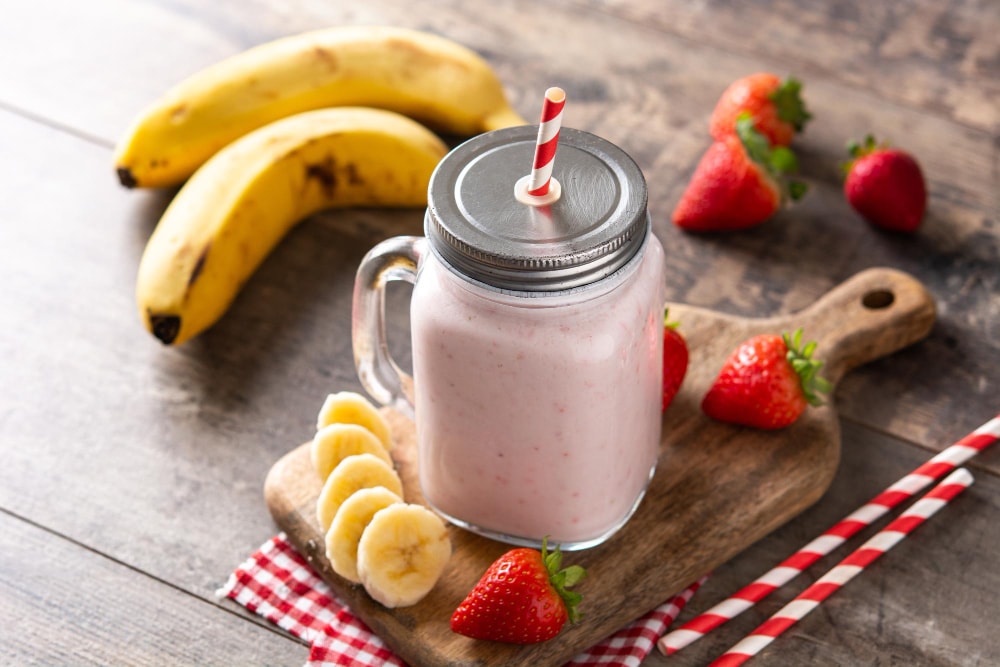
Smoothies work especially well for muscle-building because they solve several common nutrition challenges at once.
If you’ve ever wondered how long does it take to build muscle, consistency—both in training and nutrition—is the real answer. Smoothies make that consistency easier.
- Fast and convenient: Blending takes minutes, making it easier to meet calorie and protein targets even on busy days
- Easy to pack nutrients: Protein, carbohydrates, and healthy fats can be combined in one balanced drink
- Better digestion: Liquid or semi-liquid meals are often easier to digest and absorb, which can be helpful post-workout
- Post-workout recovery: Smoothies help replenish glycogen and provide amino acids needed for muscle repair
Research also suggests that high-protein smoothie formulations can improve protein utilization and digestibility, making them especially useful around workouts.
Key Ingredients for Muscle-Building Smoothies
The effectiveness of a smoothie comes down to its ingredients. Each component plays a specific role in muscle growth and recovery.
- Protein sources (whey, casein, pea, soy): Supply essential amino acids, especially leucine, which stimulates muscle protein synthesis
- Healthy carbs (oats, bananas, berries): Replenish glycogen stores and support training performance
- Healthy fats (nut butters, avocado, chia/flax seeds): Slow digestion slightly, support hormone health, and increase calorie density
- Liquid base (milk, plant milks, water, coconut water): Affects protein content, hydration, and mineral intake
- Extras (Greek yogurt, spinach, cocoa powder): Add protein, antioxidants, micronutrients, and flavor without excess sugar
Studies on protein-enriched and fermented dairy-based smoothies also show improved protein digestibility and antioxidant activity, supporting recovery and overall health.
Best Smoothie Recipes for Muscle Gain
These homemade shakes for muscle gain are designed to be practical, balanced, and easy to adjust based on your needs.
1. Banana + Whey Power Smoothie
Ingredients:
- 1 banana, break it into chunks
- 1 scoop whey protein
- 1 cup milk (or plant milk)
- 1 tbsp peanut butter
- A handful of ice
Blend on high for 30-45 seconds until completely smooth. This is a classic post-workout option with estimated protein ~25–30g.
The banana provides fast-digesting carbs, whey delivers rapidly absorbed protein, and peanut butter adds calories and healthy fats—ideal for recovery and muscle repair.
2. Berry Oat Protein Smoothie
Ingredients:
- 1/2 cup mixed berries
- 1/2 cup oats (rolled oats work best)
- 1 scoop protein powder
- 1 cup Greek yogurt
- 1 cup milk or water
Blend on medium-high for 45-60 seconds until creamy and smooth. If you want softer oats, let it sit for 1-2 minutes, then blend again briefly. This meal offers ~28–35g proteins.
Oats offer slow-release carbohydrates, while berries contribute antioxidants that may help reduce exercise-induced inflammation. Greek yogurt adds thickness and casein protein for longer-lasting amino acid delivery.
3. Green Muscle Builder
Ingredients:
- Handful spinach or kale
- 1 scoop plant or whey protein
- 1/2 avocado
- 1 tbsp chia seeds
- 1 cup coconut water
Blend on high for 45–60 seconds until smooth and fully combined, you can add a splash of coconut water if too thick. This smoothie has ~20–28g proteins, supports muscle gain while emphasizing micronutrients.
Leafy greens provide vitamins and minerals, avocado and chia seeds add healthy fats, and coconut water supports hydration and electrolyte balance.
4. Coffee + Protein Boost Smoothie
Ingredients:
- 1 cup cooled brewed coffee
- 1 scoop protein
- 1 banana
- 1 tbsp almond butter
- Ice
Blend on high for 30-45 seconds. This smoothie works especially well as a pre-workout option with ~25–30g proteins.
Caffeine from coffee may enhance workout performance, while protein and carbs support muscle recovery.
5. Tropical Muscle Refuel
Ingredients:
- 1/2 cup frozen pineapple
- 1/2 cup frozen mango
- 1 scoop protein
- 1/2 cup Greek yogurt
- 1 cup water or coconut water
Blend on high for 45–60 seconds until smooth. This blend works well post-workout or during high-volume training days with ~25–32 g proteins.
Pineapple and mango provide fast-digesting carbs and enzymes, paired with Greek yogurt for protein and probiotics.
Tips for Boosting Smoothie Protein
If your daily intake is falling short, small tweaks can make a big difference:
- Add an extra ½ serving of protein powder
- Include Greek yogurt for additional casein protein and creaminess
- Use milk or soy milk instead of water for higher protein content
- Add seeds or nut butters for protein plus healthy fats
- Avoid over-sweetening—fruit usually provides enough natural sweetness
When to Drink These Smoothies
Timing matters, especially when paired with a structured routine or 7 day meal plan for building muscles.
- Post-workout: Ideal for recovery—aim to drink within 1 hour after training
- Breakfast replacement: A nutrient-dense option when appetite is low
- Pre-workout: Consume 1–2 hours before training with moderate carbs and protein
Portion size should match your calorie needs—larger blends for bulking phases, smaller ones for maintenance.
How to Customize Smoothies for Dietary Needs
For Muscle Gain + Weight Maintenance
Adding oats, bananas, and nut butter increases calories and carbohydrates, supporting training intensity and recovery without excessive volume.
For Low-Carb Preference
Using berries, leafy greens, avocado, and unsweetened plant milk lowers glycemic load while still providing fiber, fats, and micronutrients.
For Vegan Diets
Plant proteins like pea or soy, combined with plant milks, seeds, and nuts, can provide complete amino acid profiles when used consistently.
Conclusion
Smoothies can be powerful tools for muscle gain when built with the right balance of protein, carbohydrates, and fats.
They support recovery, improve nutrient intake consistency, and adapt easily to different training goals and dietary needs.
That said, smoothies work best when paired with progressive training, balanced meals, and adequate rest. Think of them as a strategic supplement to your routine—not a replacement for overall nutrition.
Experiment with ingredients, adjust portions, and personalize your blends to fit your taste and goals.
For more evidence-based nutrition and fitness insights, explore Level Up Your Meals and our blog for deeper guidance on building strength and long-term health.