Pickles are loved worldwide for their crunchy texture, tangy flavor, and versatility.
They show up as snacks, side dishes, and flavor boosters in everything from burgers to rice bowls.
But beyond their bold taste, many people wonder: are pickles actually healthy, or are they just salty treats?
This article takes a balanced look at the health benefits, potential risks, and how to choose pickles wisely, drawing from recent research.
What Are Pickles & How Are They Made?
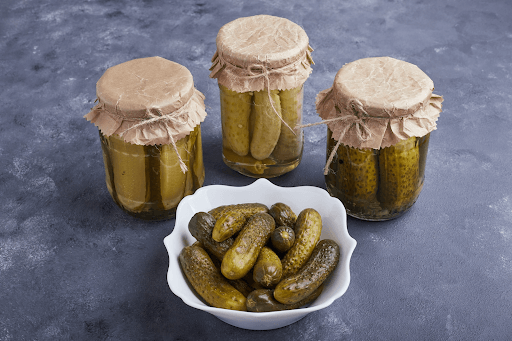
Pickles are vegetables—most commonly cucumbers—preserved to extend shelf life and enhance flavor.
They’re typically made using one of two methods:
- Vinegar-brined pickles
These are soaked in vinegar, water, salt, and spices. The acidic environment preserves the food but does not support live beneficial bacteria, so they are not probiotic. - Fermented pickles
These rely on natural fermentation in saltwater brine, where beneficial lactic acid bacteria develop over time. Research on fermented vegetables shows that this process can improve flavor, texture, and microbial stability while introducing potentially beneficial bacteria.
Pickling isn’t limited to cucumbers.
Globally, people pickle onions, radishes, cabbage (sauerkraut), carrots, and many other vegetables, making it one of the world’s oldest preservation techniques.
Potential Health Benefits of Pickles
When eaten appropriately, pickles can offer some benefits:
Low in calories and fat
Pickles are mostly water and fiber, making them a low-calorie option for people watching energy intake.
Contain vitamins, minerals, and antioxidants
Depending on the vegetable used, pickles can provide vitamin K and plant antioxidants.
Fermentation may also help preserve or enhance certain bioactive compounds during storage.
Possible digestive and gut health support (fermented pickles)
Studies on fermented vegetables show that live lactic acid bacteria may help support gut microbiome balance.
Although benefits depend on fermentation quality and storage conditions.
Low-carb and diet-friendly
Pickles fit well into low-carbohydrate or weight-management eating patterns due to minimal sugar and starch.
Electrolyte support from pickle juice (specific cases)
Clinical research has explored pickle juice for muscle cramps and electrolyte replacement.
A study found that pickle juice may help reduce muscle cramps in certain medical populations, likely due to sodium and acetic acid effects rather than hydration alone.
Risks & Nutritional Drawbacks of Pickles
Despite their benefits, pickles are not risk-free:
Very high sodium content
Most pickles contain large amounts of salt, which can raise blood pressure and strain the cardiovascular system if consumed frequently or in large portions.
Research on fermented vegetables consistently identifies sodium as their main nutritional drawback.
Acidity may irritate digestion
Vinegar-based pickles can worsen acid reflux, heartburn, or stomach discomfort in sensitive individuals.
Sodium-related concerns for certain people
Individuals with hypertension, kidney disease, or sodium sensitivity should be especially cautious.
Limited overall nutritional density
Pickles are not major sources of protein, fiber, or essential micronutrients—they complement meals rather than replace nutrient-dense foods.
Possible additives in commercial pickles
Some store-bought varieties contain added sugar, preservatives, artificial coloring, or flavor enhancers, which reduce their health value.
Research on pickle quality highlights how formulation and storage strongly influence nutritional outcomes.
How to Choose & Eat Pickles Wisely
To enjoy pickles with fewer downsides:
- Choose fermented pickles (labeled “naturally fermented” or “contains live cultures”) for potential probiotic benefits.
- Look for low-sodium or reduced-salt options when available.
- Consider homemade pickles to control salt levels and avoid additives.
- Eat pickles in moderation—as a condiment or side, not a main food.
- Balance pickle intake with potassium-rich, whole foods like vegetables and legumes to offset sodium.
- If you have blood pressure, liver, or kidney conditions, limiting high-sodium pickles is especially important, as emphasized in clinical nutrition research.
Conclusion
Pickles can be part of a healthy diet when chosen carefully and eaten in moderation.
Research shows that fermented pickles offer the most potential benefits, while high sodium remains the primary concern, especially for vulnerable groups.
Overall, pickles are a flavorful addition to meals—not a superfood, but not a food to fear either.